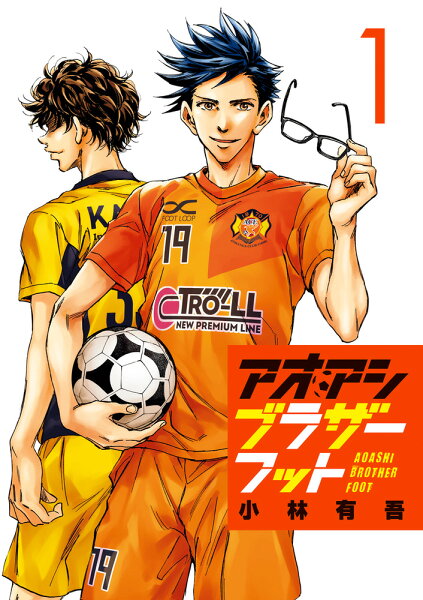
Ao Ashi Review: The Soccer Prodigy Who Sees the Whole Field and the Team That Teaches Him Why That Matters
by Yugo Kobayashi
Read the first volume. If it doesn't hook you, put it down. It'll hook you.
Buy Ao Ashi on Amazon →*Affiliate link — I earn a small commission at no extra cost to you.
When I was in high school, my football coach moved me from striker to defensive midfielder. I was furious. I thought he was punishing me. Two years later, I understood he had seen something in me that I couldn't see in myself.
Ao Ashi is a manga about exactly that moment — and what comes after it.
Quick Take
- The most tactically serious soccer manga available in English — real club youth academy, real positional play, no superpowers
- Ashito Aoi can memorize the position of every player on the field simultaneously; his coach sees this and immediately converts him from striker to left back
- Age rating: T (Teen) — safe for all ages, but written for adults; published in Big Comic Spirits (seinen)
Who Is This Manga For?
- Soccer fans who want a manga that treats the game with genuine tactical intelligence
- Readers who enjoy stories about being told "your talent is not what you think it is" and proving yourself anyway
- Anyone curious how professional youth academies actually work — selection, development, cuts
- Fans of realistic sports manga who found Blue Lock too fantastical
Content Warnings & Age Rating
Age Rating: T (Teen) Content Warnings: Sports competition, selection pressure, themes of failure and perseverance; some interpersonal conflict between teammates
The T rating is accurate. This is a safe read for teenagers and up. The seinen publication means the storytelling is mature in tone, not in content.
Yu's Rating
| Category | Score |
|---|---|
| Story Depth | ★★★★★ |
| Art Style | ★★★★☆ |
| Character Development | ★★★★★ |
| Accessibility for Non-Japanese Readers | ★★★★★ |
| Reread Value | ★★★★☆ |
Story Overview
Ashito Aoi is a third-year middle school student from Ehime Prefecture — a small coastal town, a weak school team, no connections to professional soccer. He is poor, headstrong, and convinced he is going to become a professional striker.
On the day his team loses an important match because of his own mistake, a stranger is watching from the sideline. His name is Fukuda. He is 32 years old, has played professional soccer in Spain's top division, and retired early due to injury. He now coaches the youth academy of Tokyo City Esperion — one of Japan's professional J-League clubs.
Fukuda invites Ashito to a tryout. During the trials, Ashito does something unusual: after any passage of play, he can recall the exact position of every player on the field — all 22 of them — as if he was watching from above. This is not a superpower. It is a form of spatial memory that elite players develop over years of training. Ashito has it naturally, at 15, without knowing what it is.
Fukuda recognizes it immediately. And here is the twist: he has been planning to convert Ashito to left back since before the tryout even began.
Ashito does not take this well. He wants to score goals. He wants to be a striker. He spends a significant portion of the series furious at this decision, trying to prove Fukuda wrong, gradually understanding why Fukuda was right.
The story follows Ashito's time at the academy: learning positional play from scratch, fighting to stay in the A-team, navigating the brutal selection process that cuts players every season, and slowly becoming the kind of left back whose vision controls the entire left side of the field.
Key arcs include:
- The Musashino Youth match, where four players earn their first A-team promotion
- The Funabashi Gakuin match, where Ashito receives a red card during a slump and must rebuild his confidence
- The Aomori Seiryu match against Hokuno Ren, where Ashito first grasps what it means to be complete as a defender — dangerous going forward, solid going back
Characters
Ashito Aoi — The story belongs to him, but he is not easy to root for at first. He is arrogant, impulsive, and repeatedly makes the same mistake: prioritizing what he wants over what the team needs. The series is patient with him. His development from instinct-driven striker to positionally intelligent left back takes years of story time, and Kobayashi earns every step of it. The player Ashito becomes by volume 34 is unrecognizable from the boy who showed up at the tryout.
Coach Fukuda — He is the series' most unusual character. He saw Ashito's talent before Ashito did, had a plan for it before they even spoke, and has not explained that plan in full to this day. His coaching style is indirect — he creates situations where players discover things themselves rather than being told. He played in Spain. He has a vision for what world-class soccer looks like, and he is building toward it with his youth players. He is one of the most convincingly written sports mentors in manga because his philosophy is specifically about soccer, not about life lessons.
Akutsu — An older academy player who initially treats Ashito with open contempt — screaming at his mistakes, dismissing his potential. This relationship slowly, convincingly transforms into something closer to a demanding mentorship. The shift is earned, not sudden.
Hana Ichijo — A girl Ashito meets in Tokyo who becomes romantically important to the series. Her presence keeps the story grounded outside of soccer without feeling like a distraction from it.
Art Style
Kobayashi's soccer sequences are drawn with unusual tactical clarity. You can read the shape of a team's formation from how players are positioned across the page. Ball movement is coherent. The spatial relationships between players — which is what Ashito's ability is about — are readable at a glance.
Character design is more realistic than shonen manga standards. Bodies move like bodies. The senior players look physically different from the youth players. It fits the seinen publication and the realistic tone of the series.
Cultural Context
Ao Ashi is set in the J-League youth academy system — Japan's professional club development pipeline. This is a genuinely different environment from the high school club system that most Japanese soccer manga depicts. Academy players are contracted, not just students. Selection is ongoing. Players can be released at any time.
The series was developed with input from actual soccer journalists and former players. This shows. The tactical discussions in the manga — about positional play, about what it means to read the game before the ball arrives — are things that professional coaches actually say.
Japan has produced J-League players who cite Ao Ashi as accurate to their experience in youth academies. That does not happen with Captain Tsubasa.
What I Love About It
The moment Fukuda tells Ashito he is going to play left back.
Ashito has just completed the tryout. He has done things no other player did. He is expecting confirmation that he is a striker, that he is special, that everything he believed about himself is correct.
Fukuda tells him he saw all of that — and he is going to play left back.
This scene is the series in miniature. Fukuda is not correcting a mistake. He is redirecting a talent that Ashito did not understand he had. Ashito's overhead vision — the ability to see the entire field — is wasted on a striker who stays near the opponent's goal. A left back with that vision can influence play across the entire pitch. Fukuda knows this. Ashito cannot see it yet.
What I love is that the manga takes 34 volumes to prove Fukuda right. There is no shortcut. No moment where Ashito suddenly gets it and everything clicks. He has to be wrong many more times before he is right. That patience is why this series feels true.
What English-Speaking Fans Say
English-speaking soccer fans describe Ao Ashi as the first manga that made them feel like it was written by someone who actually plays the game. The spatial awareness discussions, the positional play chapters, the way coaches talk about reading the field — readers who have played competitive soccer consistently say this is accurate.
Readers who do not follow soccer describe it as effective at making them care. The emotional stakes of the youth academy — the cuts, the competition, the grinding work of learning something from the beginning — translate regardless of whether you know a 4-3-3 from a 4-4-2.
The most common comparison in English-language discussion is to Haikyuu!! — another sports manga that treats its sport with genuine seriousness and builds character through the logic of the game itself.
Memorable Scene ⚠️ Spoiler Warning
The Funabashi Gakuin match.
Ashito has been playing well. He is starting to believe in his position, starting to feel like a left back instead of a striker who got redirected. Then in a critical match, frustrated, he loses his composure. He receives a red card. His team has to play a man down because of him.
Kobayashi does not cut away from the consequences. Ashito has to watch his team fight for the result he made harder. He has to sit with what his mistake cost them. This is a long sequence — not the red card itself, but everything after it.
What makes the scene important is that it does not resolve quickly. The slump that follows this match is real, sustained, and handled without easy answers. Ashito has to earn his way back not through a sudden breakthrough but through the slow work of understanding what went wrong.
This is what separates Ao Ashi from most sports manga. The setbacks are not steps in a staircase leading predictably upward. They are setbacks.
Similar Manga
| Title | Its Approach | How Ao Ashi Differs |
|---|---|---|
| Blue Lock | Striker ego development, fantastical power-ups, survival game format | Ao Ashi is team-focused, positional, realistic — no superpowers |
| Captain Tsubasa | Classic soccer manga, inspirational, legendary status | Fantastical and older; Ao Ashi treats real modern tactical soccer |
| Haikyuu!! | Volleyball, team dynamics, character depth through sport | Closest in spirit; Ao Ashi has more tactical depth, less shonen energy |
| Days | Youth soccer, high school setting, character-driven | More emotional, less tactical; high school rather than professional academy |
Reading Order / Where to Start
Volume 1 — Ashito's discovery and the academy trial. The first three volumes establish everything the series is built on.
VIZ Media is publishing the English edition. At 6 volumes in English against 34 in Japanese, you will eventually hit the wall of the ongoing translation. The Japanese run is complete; the story has an ending.
Official English Translation Status
VIZ Media is actively publishing the English edition. The Japanese series is complete at 34 volumes. English publication is ongoing — expect the full story to take several more years to reach English readers.
Digital editions are available via VIZ's platform. The print volumes are also in wide release.
Pros & Cons
Pros
- The most tactically accurate soccer manga available in English — developed with real soccer journalists
- Ashito's development is slow, earned, and genuinely satisfying over the full series
- The professional youth academy setting is unique — realistic selection pressure, no high school nostalgia
- 34 volumes complete in Japanese; the story has a proper ending
Cons
- English translation is ongoing — you will catch up and then wait
- The tactical depth can be demanding if you have no soccer background
- Slower pacing than shonen sports manga; early volumes take time to build
If you need instant payoff in your sports manga, this is a slow burn. That is either a dealbreaker or exactly what you want.
Is Ao Ashi Worth Reading?
Yes — particularly if you want a sports manga that respects both its sport and its reader's intelligence.
Ao Ashi does things no other soccer manga does: it depicts how professional-level soccer is actually thought about, from positional play to reading the game before the ball moves. Ashito's conversion from striker to left back is the setup for one of the most complete character development arcs in sports manga.
The ongoing English translation is the only real obstacle. If you read six volumes and get hooked, you will spend time waiting. That is worth knowing before you start.
Format Comparison
| Format | Notes |
|---|---|
| Individual Volumes | VIZ Media; ongoing English publication; 6 volumes available |
| Digital | Available via VIZ; same content as print |
| Japanese (complete) | 34 volumes; for readers who can't wait for the translation |
Where to Buy
Read the first volume. If it doesn't hook you, put it down. It'll hook you.
This post contains affiliate links. If you purchase through these links, I may earn a small commission at no extra cost to you. As an Amazon Associate, I earn from qualifying purchases.
*Affiliate link — I earn a small commission at no extra cost to you.
Written by
Yu
Manga Enthusiast from Japan
I grew up in Japan and manga literally saved me during a tough time in elementary school. My English isn't perfect, but my love for manga is real — and I want to share it with you.
Disclosure: This post contains affiliate links. As an Amazon Associate, I earn from qualifying purchases at no extra cost to you.